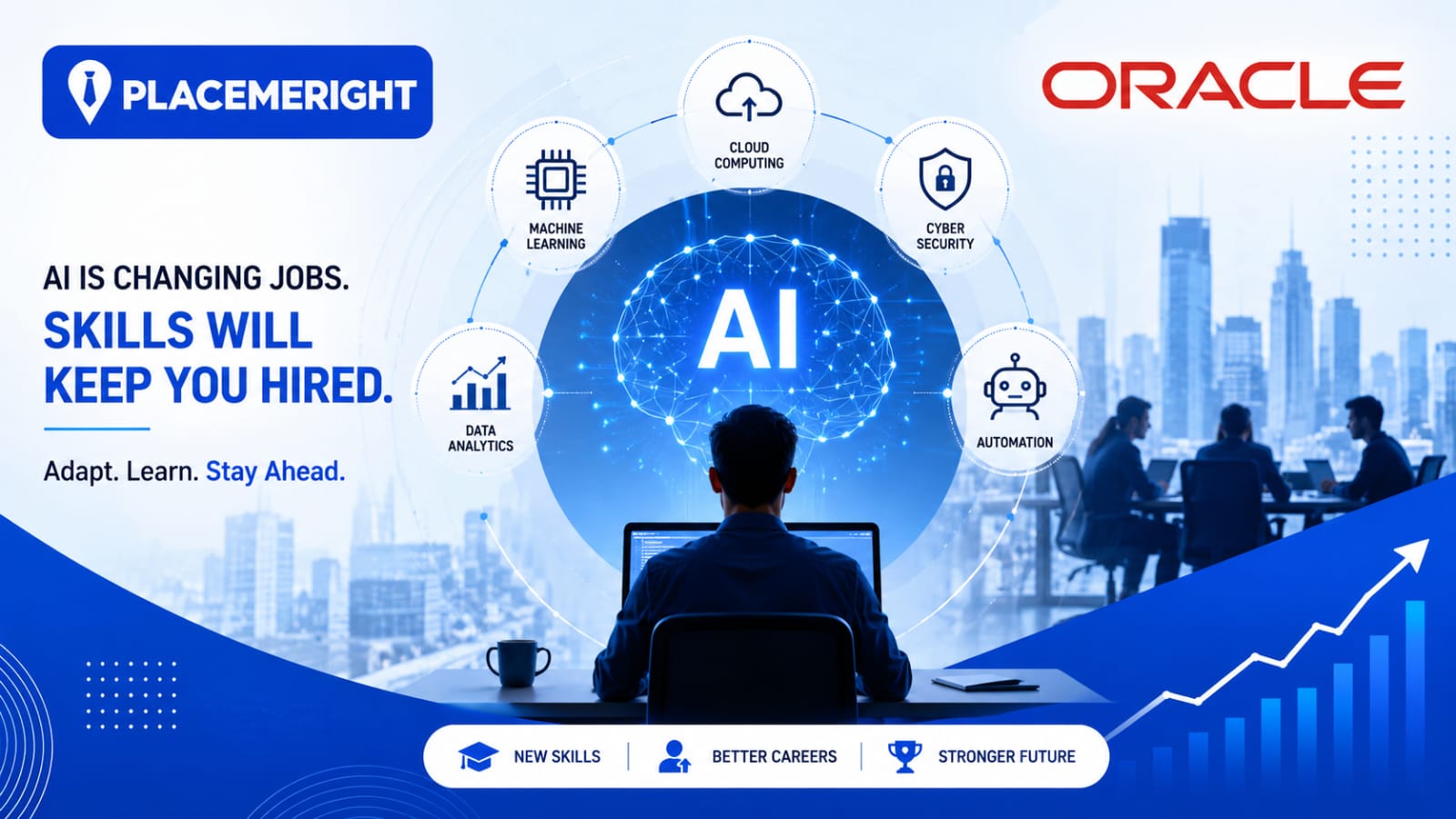
The technology industry is witnessing a major transformation as artificial intelligence moves from experimentation to large-scale deployment. Recent reports indicating that Oracle reduced its workforce by approximately 21,000 employees over the past year have reignited discussions about how AI is reshaping corporate hiring strategies. While workforce restructuring is not new in the tech sector, the growing connection between automation, AI adoption, and changing job requirements highlights a broader trend that extends far beyond a single company.
For professionals, graduates, and job seekers, the story is not simply about layoffs. It is about understanding how technology companies are redefining the skills they need in an AI-driven business environment.
The Real Story Is Not Layoffs—It's Workforce Transformation
When major technology companies reduce headcount, the immediate focus is often on the number of jobs affected. However, the more important question is what happens next.
Many organizations are investing heavily in AI-powered systems that can automate repetitive tasks, improve productivity, and streamline operations. As a result, companies are reevaluating traditional job roles and identifying areas where technology can handle work that previously required larger teams.
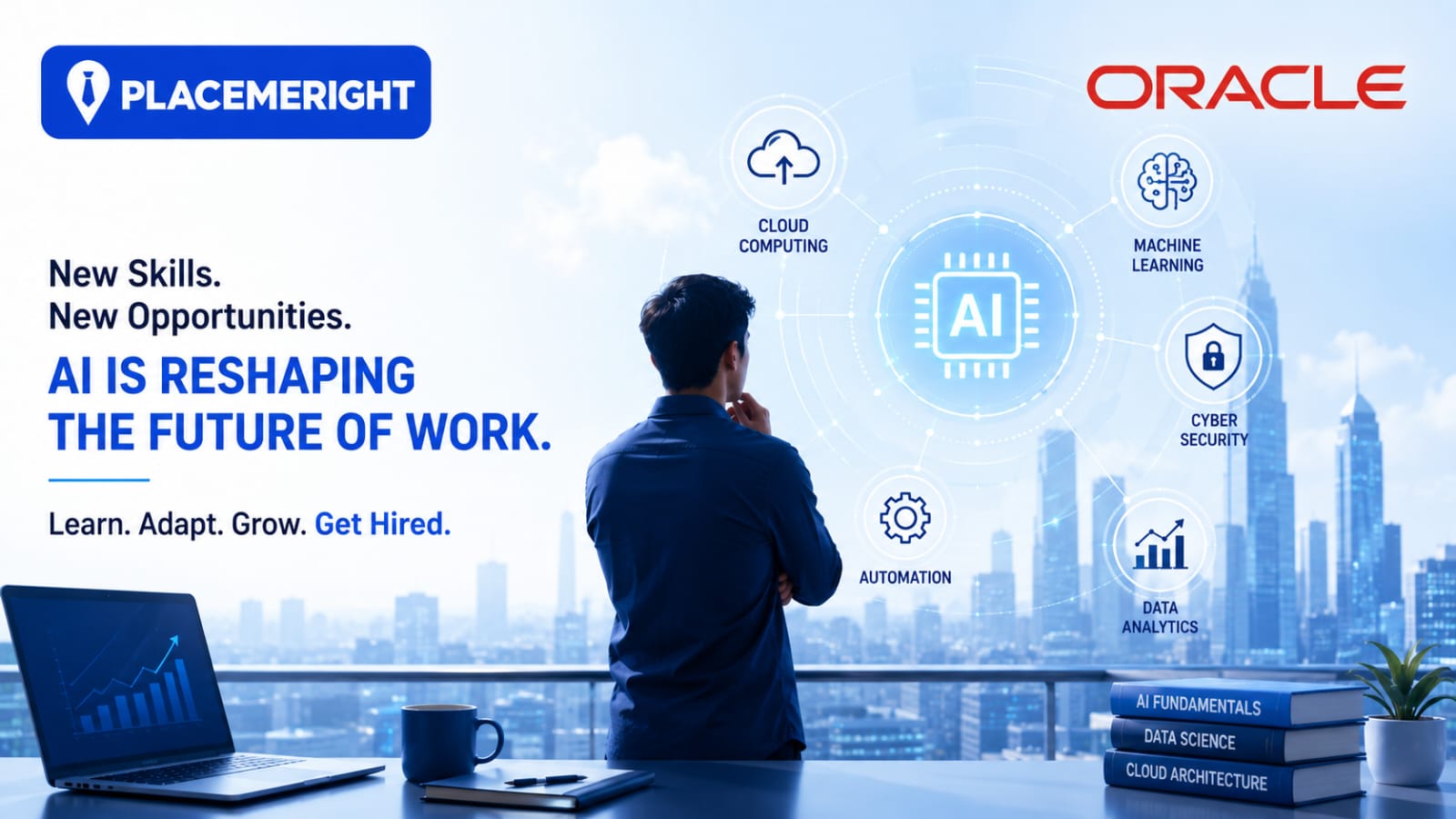
This does not necessarily mean fewer opportunities across the industry. Instead, it means demand is shifting toward roles that involve AI implementation, cloud infrastructure, cybersecurity, data engineering, machine learning operations, and human-AI collaboration.
The Oracle workforce reduction serves as another indicator that companies are increasingly prioritizing efficiency, automation, and specialized technical expertise.
Why Employers Are Looking for Different Skills
The rise of AI has changed the definition of a competitive candidate.
Five years ago, employers primarily focused on technical knowledge, certifications, and years of experience. Today, organizations increasingly value candidates who can work alongside AI systems and use technology to improve productivity.
Some of the most sought-after skills include:
- AI and machine learning fundamentals
- Prompt engineering and AI-assisted workflows
- Cloud computing platforms
- Cybersecurity and risk management
- Data analytics and visualization
- Automation tools and process optimization
- Cross-functional problem solving
Employers are not simply looking for workers who can perform tasks. They are looking for professionals who can leverage technology to create greater business value.
Free B2B hiring resource
Download the 2026 India IT Salary & Hiring Guide
Get the exact salary benchmarks for React, Python, Data Science, and AI talent across all major Indian tech hubs.
The Impact on Freshers and Early-Career Professionals
For students and fresh graduates, the changing job market presents both challenges and opportunities.
Entry-level positions that involve repetitive processes may become increasingly automated. At the same time, companies continue to hire talent capable of adapting to new technologies and learning rapidly.
This means freshers should focus less on memorizing tools and more on developing transferable skills such as analytical thinking, communication, digital literacy, and AI familiarity. Candidates who understand how AI integrates into business workflows may gain a significant advantage over those who rely solely on traditional technical qualifications.
What This Means for the Future of Hiring
The Oracle workforce reduction reflects a trend visible across the global technology industry. Organizations are balancing cost efficiency with innovation, and AI is becoming central to that strategy.
Recruiters are already adjusting their hiring criteria. Job descriptions increasingly mention AI tools, automation platforms, and data-driven decision-making. Companies are also placing greater emphasis on adaptability because technology continues to evolve at a rapid pace.
Rather than replacing workers entirely, AI is changing the nature of work itself. Professionals who continuously learn and adapt are likely to remain in demand, while static skill sets may become less valuable over time.
The Bottom Line
Oracle's workforce reduction is not just another layoff headline. It highlights a broader shift occurring throughout the technology industry. As companies accelerate AI adoption, hiring priorities are evolving and workforce expectations are changing.
For job seekers, the key takeaway is clear: AI literacy is no longer optional. Understanding how technology is transforming workplaces can help professionals make smarter career decisions and remain competitive in an increasingly automated world.
The future job market will reward those who combine technical expertise, adaptability, and the ability to work effectively with AI-driven systems. Companies may change, technologies may evolve, and job roles may transform, but continuous learning remains the most valuable skill of all.
Join 5,000+ HR Directors & CTOs
Get the PlaceMeRight daily tech hiring insights and market intelligence delivered straight to your inbox.

Need hiring clarity?
Talk to PlaceMeRight for premium technical recruitment support across India.
Contact PlaceMeRight